
Can an employer be sued for disparate impact in hiring?
- Raghav Singh
- Jun 25, 2025
- 1 min read

Updated: Jun 26, 2025
Yes - your company can be sued for disparate impact.
Disparate impact occurs when a neutral employment practice (e.g., an AI hiring tool, assessment test, or job requirement) disproportionately excludes members of a protected group (such as based on race, sex, age, or disability), even if there is no intent to discriminate.

Legal Basis for Disparate Impact Claims:
Employers may be held liable under:
Title VII of the Civil Rights Act of 1964 – covers race, color, religion, sex, and national origin.
Age Discrimination in Employment Act (ADEA) – protects individuals age 40 and over.
Americans with Disabilities Act (ADA) – covers discrimination against disabled individuals.
Real-World Example:
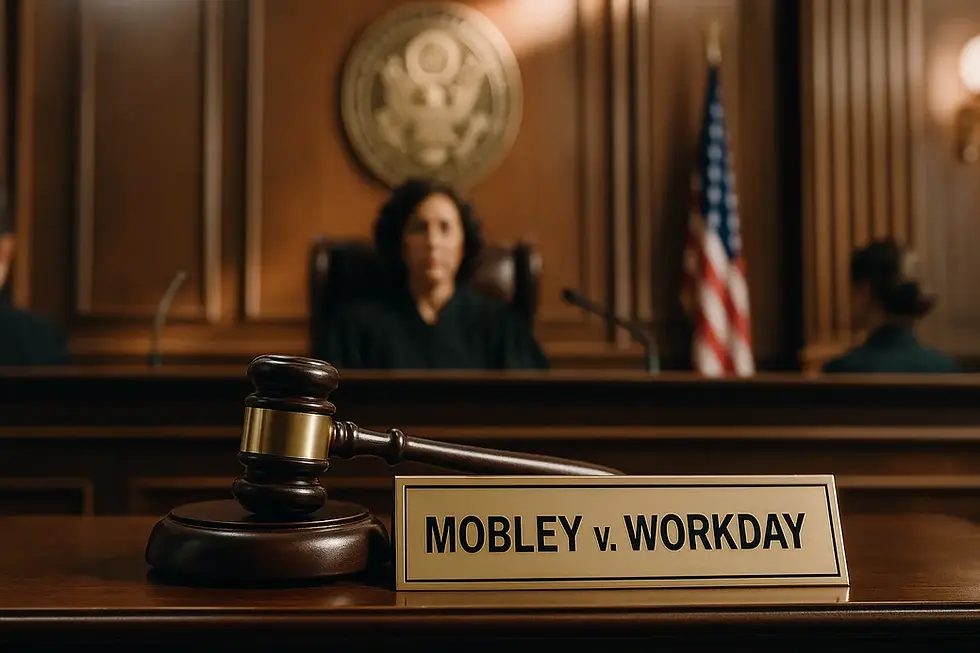
In Mobley v. Workday (2024–2025), a class-action lawsuit alleges that Workday’s AI hiring tools disproportionately rejected older, Black, and disabled applicants. The court allowed it to proceed as a collective action, signaling that employers using such tools may be liable if the tools cause discriminatory outcomes.
Real-World Example:
In Mobley v. Workday (2024–2025), a class-action lawsuit alleges that Workday’s AI hiring tools disproportionately rejected older, Black, and disabled applicants. The court allowed it to proceed as a collective action, signaling that employers using such tools may be liable if the tools cause discriminatory outcomes.
How to Mitigate the Risk:
Conduct regular bias audits of hiring tools
Monitor for adverse impact ratios
Offer reasonable accommodations for assessments
Ensure transparency and documentation
Failing to address disparate impact can lead to lawsuits, regulatory penalties, and reputational harm. Proactive auditing and inclusive design are your best defenses.


Comments